
Gorillas, like humans, go through various stages of life, including infancy, childhood, adolescence, adulthood, and old age. The lifespan of gorillas varies depending on factors such as species, habitat, and individual health. Here’s a general overview of the aging process in gorillas:
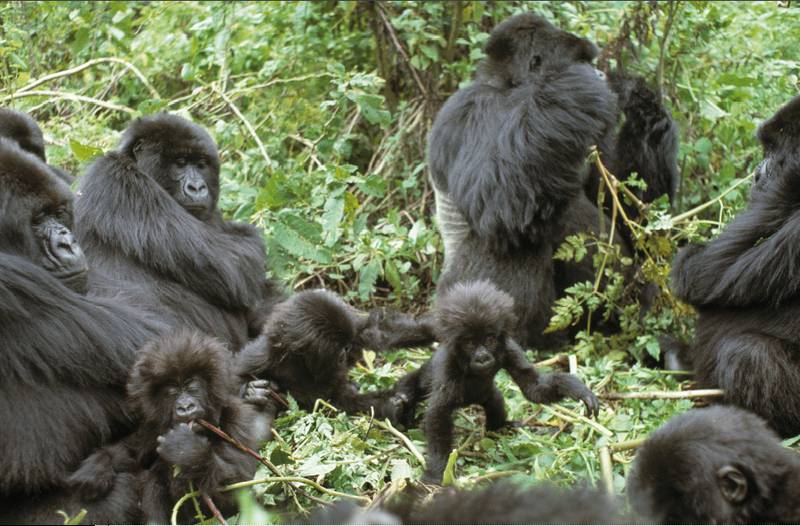
- Infancy: Gorillas are born after a gestation period of about 8.5 months. Newborn gorillas are completely dependent on their mothers for care and nourishment. They typically stay close to their mothers and begin to learn essential skills such as climbing and social behaviors.
- Childhood: Gorilla childhood lasts for several years, during which young gorillas continue to learn from their mothers and other members of their social group. They become more independent over time but still rely on their mothers for protection and guidance.
- Adolescence: Adolescent gorillas experience significant growth and development, both physically and socially. They may begin to challenge the dominant silverback and establish their place within the social hierarchy. This period is crucial for learning important social skills and behaviors.
- Adulthood: Gorillas reach maturity at different ages depending on factors such as sex and environmental conditions. Male gorillas (silverbacks) typically reach maturity between 11 to 13 years of age, while females mature earlier, usually between 6 to 8 years old. Adult gorillas are fully grown and play important roles within their social groups.
- Old Age: Gorillas can live for several decades in the wild and in captivity. The exact lifespan varies between species, with western gorillas typically living 35 to 40 years in the wild, while mountain gorillas can live longer, up to 35 to 50 years. In captivity, gorillas may live even longer due to access to healthcare and protection from predators and other threats.
As gorillas age, they may experience physical changes and health challenges similar to humans, such as reduced mobility, dental issues, and susceptibility to diseases. However, older gorillas often continue to play important roles within their social groups, providing guidance and leadership to younger members.

Latest Products
-
 Get a modern wordpress website designed for a blog site, landing page or affiliate site
Price range: $89.00 through $299.00
-
Get any wordpress website customised or maintained to your exact requirements from a top rated developer.
Price range: $57.00 through $250.00
-
 UK Visa Application Preparation
Price range: $150.00 through $500.00
-
 New limited company formation in Uganda
$369.00
-
 5-Day Gorilla and Chimps Trekking Safari
$1,500.00
-
 STICK MANN Kids Hoodie
$65.00
-
 MANN CAN DO Kids Hoodie
$65.00
-
 MANN MADE IN LONDON Kids Hoodie
$65.00
Leave a Reply
You must be logged in to post a comment.